Zelda: Link’s Awakening – A Dream Worth Loving and Losing
There’s something quietly unsettling about The Legend of Zelda: Link’s Awakening. On the surface, it’s colourful, playful, and almost toy-like in its presentation. But the longer you spend on Koholint Island, the more that sweetness starts to feel like a mask that’s hiding something sadder underneath. That emotional undercurrent is what makes this one of the most heart-wrenching games and saddest video games ever made, and why its ending still catches people off guard decades after its original release.
I’ve played a lot of games that reach for emotion and miss. Link’s Awakening earns it quietly, scene by scene, character by character, until the final moment hits you like a door closing on something you didn’t realise you’d been holding onto.
This is a game I love deeply. It is also a game that broke something in me the first time I finished it. And I think that’s exactly the point.
The Remake of Zelda: Link’s Awakening Looks Beautiful…Until It Doesn’t
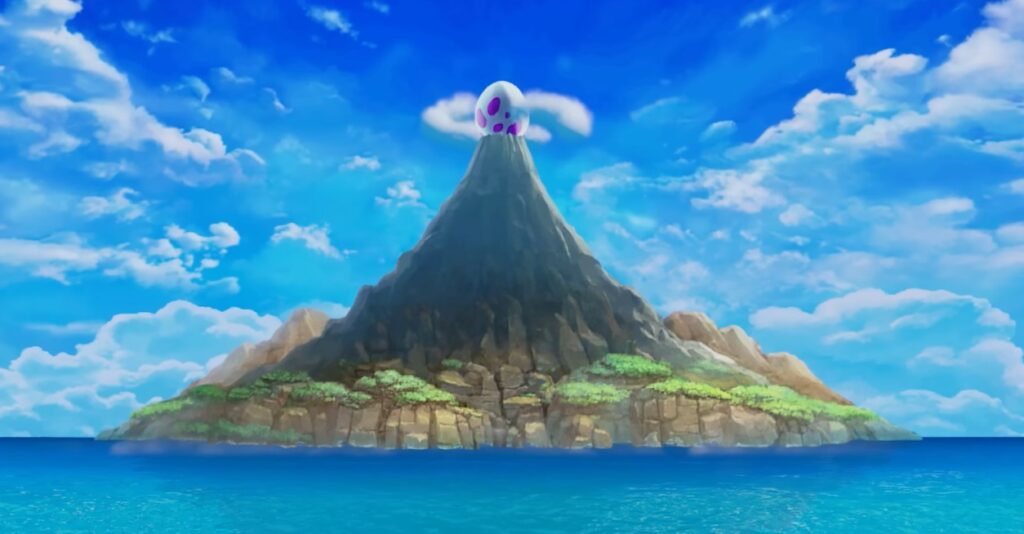
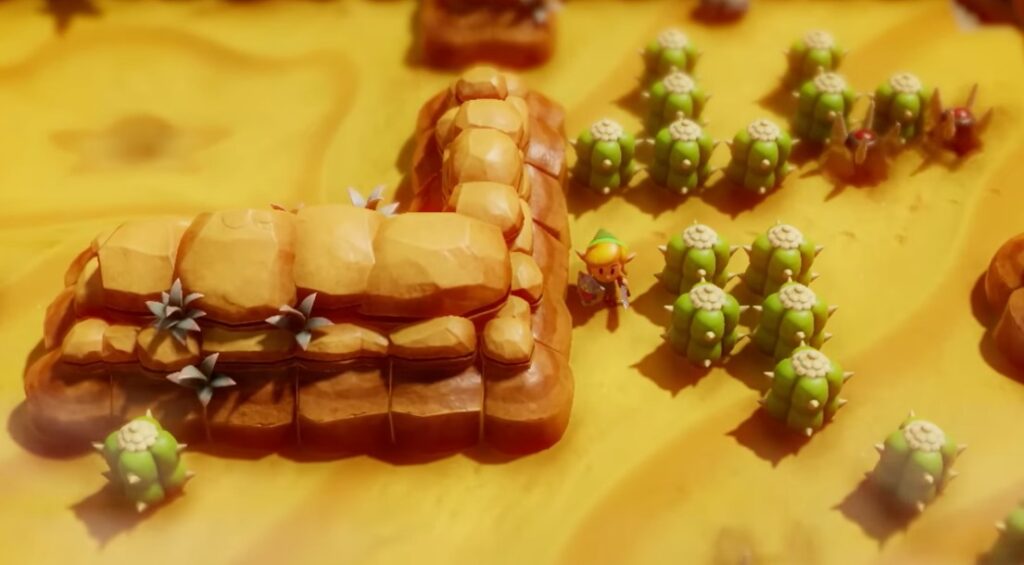
The 2019 Nintendo Switch remake arrives dressed in a diorama art style that is genuinely gorgeous. Everything looks handcrafted and soft, like a children’s storybook brought to life, often beaming with sunshine and to be honest, reminds me of a coastal island full of good vibes. Which is why the emotional gut-punch of the ending hit even harder.
There is something uniquely devastating about a world that looks this tender and carefree being erased.
The remake also makes some small but significant changes that deepen the emotional experience.
The Wind Fish’s dialogue was altered from “That memory must be the real dream world” to “That memory makes the dream world real”. Some players mention that this shift takes a considerable time unpacking, and rightly so. The difference between those two lines is enormous.
The secret Marin ending was also made more subtle and more beautiful in the Switch version, her image appears in the sky, closes her eyes in what appears to be a quiet laugh, and then fades into the silhouette of a seagull flying away. It is a blink-and-you’ll-miss-it moment that rewards players who made it through without a single death, and it is one of the most quietly devastating rewards in gaming.
The Technical Issues in Link’s Awakening
Frame rate drops are noticeable in several outdoor areas, especially during transitions or when moving quickly between screens. Many players have pointed this out, and once you see it, you can’t unsee it. Once you notice the stutters, they’re hard to unsee. For a game built on immersion and emotional investment, those technical interruptions are a shame. But they don’t undermine what the game achieves. Nothing could.
The remake’s diorama art style is gorgeous. Everything looks handcrafted, soft, and inviting. But the technical issues break the illusion more often than I would like.
If you are thinking is Link’s Awakening worth it, it most definitely is.
Dungeon Design in Zelda: Link’s Awakening Punishes Forgetfulness
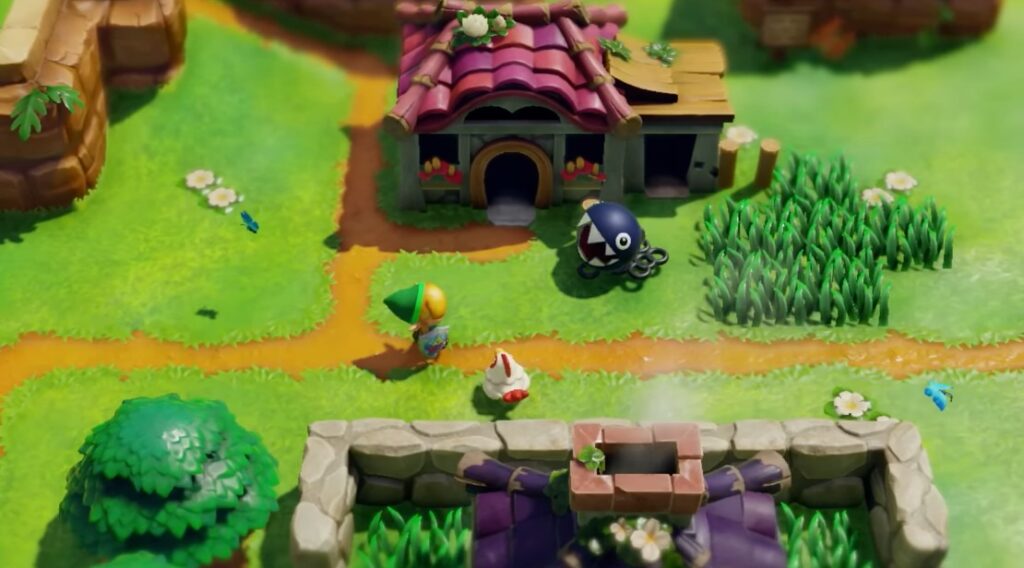
The dungeons are clever, but they can also be exhausting. The constant swapping of items becomes a mental tax rather than a puzzle challenge. I lost count of how many times I paused just to equip the Pegasus Boots, only to immediately switch back to something else.
The original Game Boy hardware had limited button inputs, which explains the design decision. What’s harder to explain is why the remake chose not to address it.
When a puzzle solution is obvious but execution requires three menu navigations, the challenge starts feeling like busywork.
The Link’s Awakening dungeon design is genuinely inspired in its structure and logic. The item-swapping is the one element that dates it in ways that feel unnecessary rather than nostalgic, but saying that I still enjoyed going through all the dungeons just so I could face a boss or solve another puzzle.
Combat Feels Dated in the Wrong Ways
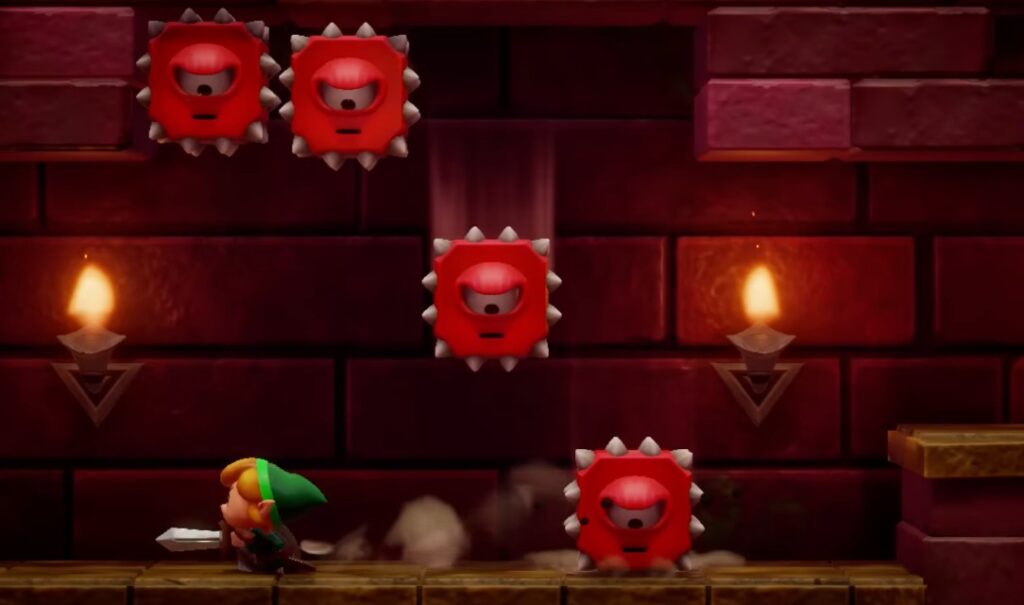
Combat is serviceable but stiff, and enemy knockback in tight dungeon corridors can feel genuinely unfair. Deaths often feel like failures of menu management, not dying because you were outplayed but because you had the wrong item equipped when a boss decided to punish you for it. That lag can leave one feeling very frustrated, especially when you’ve just about learnt the pattern, yes I too wish I had 2 more extra fingers to help with the switching of items.
That said, the combat frustrations are almost beside the point. You don’t play Link’s Awakening for the combat. You play it for Marin, for Koholint, for the slow and terrible realisation of what you’re actually doing by trying to leave.
Let’s talk about Marin, because everything that makes Link’s Awakening emotionally devastating flows through her.
Marin: The Emotional Heart of Koholint Island
Marin is a young woman living in Mabe Village with her father Tarin. She finds Link washed up on Toronbo Shores and nurses him back to health. She resembles Princess Zelda closely enough that Link, still woozy from the shipwreck, briefly mistakes her for her. She loves to sing (typical from the Zelda franchise and reminds me of the lemodies of Ocarina of time) particularly the Ballad of the Wind Fish.
She is one of the most fully realised characters Nintendo had created at the point of the original game’s release. For a Game Boy title, that is remarkable.
If you’ve ever typed does Link’s Awakening have a sad ending into a search bar, Marin is your answer.
The Link’s Awakening secret nobody is telling you
If you bring Marin along with you before helping her wake the walrus blocking the path to Yarna Desert, you unlock a series of small interactions that reveal her character with extraordinary economy. She’ll scold you for throwing pots, beg shamelessly to have a go at the Trendy Game, tell you off for looking in strangers’ drawers, and secretly encourage you to keep hitting the Cucco before remembering herself.
At the beach, she’ll look out at the ocean with you and tell you it’s her first walk with Link, a moment that sits somewhere between tender and heartbreaking because you already know it will probably be her last.
Then there is the cliff. Marin stands at the edge and tells Link her wish. To become a seagull so she can fly away from Koholint and sing her songs to people all over the world. Not just this island. Not just these same faces. The whole world.
She asks Link to always remember her when the time comes for him to leave. If he forgets, she tells him, she will never forgive him.
You will not forget her.
The Moment You Realise What You’re Actually Doing
Somewhere in the middle of the game, the tone shifts. It just… changes.
You begin to understand, mostly through dialogue and dungeons’ warnings, as well as through the increasingly insistent voice of the owl.
That waking the Wind Fish will end Koholint Island.
That every person you have met, every face you have learned, exists only because the Wind Fish is dreaming. When it wakes, the dream ends. They all disappear.
The final three dungeon bosses warn you directly to stop. Façade breaks the fourth wall entirely: “If the Wind Fish wakes up, everything on this island will be gone forever.” Even the Shadow Nightmares, in their dying moments, say “Our world is going to disappear… Our world… Our… world…”
And then you finish the final dungeon anyway. Because that’s what heroes do.
Link was the agent of destruction all along. Every instrument gathered, every dungeon cleared, every friend made, it was all building toward an act of erasure. The game never lets you forget that Marin’s disappearance is something you chose.
The Ghost and the Flow of Time
Marin is the wound at the centre of the game, but she’s not the only moment that earns tears.
There is a ghost who asks Link to carry him back to his old home one last time. You take him there. He wanders through the rooms slowly, touching things with the quiet recognition of someone visiting a place that used to be full of life. When he’s ready to leave, he says: “The flow of time is always cruel… Its speed seems different for each person, but no one can change it… A thing that doesn’t change with time is a memory of younger days…”
He then asks to be taken to his grave.
It is a side quest. A minor detour. To me, it is one of the most genuinely sorrowful things in any video game, because it has nothing to do with prophecy or chosen heroes or the fate of the world. It is just an old ghost who wanted to go home one more time.
Why This Game Hits Differently Now
Part of what makes Link’s Awakening so emotional is the question it refuses to stop asking. Does something have to be real to matter?
Koholint Island was a dream. Marin was part of that dream. The children playing ball in the village, the animals in Animal Village, the ghost and his old home, all of it generated by the sleeping mind of a god-creature who had no idea you were in there, falling in love with things that weren’t quite real.
And yet.
The connections felt real. The loss feels real. Thirty years after the original Game Boy release, people still talk about Marin the way you talk about someone you actually knew. That says something important. You didn’t watch Link grow close to Marin. You were Link. You walked her to the shore. You heard her wish. You chose to wake the Wind Fish anyway.
The guilt is yours. That’s why it lands. Zelda games are always you.
Is Link’s Awakening the Most Heart-Wrenching Zelda Game?
It’s a legitimate debate. Majora’s Mask is arguably darker, a game built entirely around grief, loss, persona, identity and the countdown to annihilation. Wind Waker has the King of Hyrule’s farewell. Twilight Princess has Midna. Skyward Sword has Fi.
But Link’s Awakening makes a unique case for itself. Its emotional power comes not from scale or spectacle but from intimacy. Koholint is small. Marin is one person. The ending doesn’t destroy a kingdom or shatter a sacred realm. It just turns out the lights on a small, warm, colourful dream, and leaves you alone in the ocean with the memory of a girl who wanted to become a seagull.
That quietness is what makes it sting longest.
A Dream Worth Having
What never left is the how the frame rate drops are real. The item-swapping is genuinely frustrating. The combat is stiff in ways that feel dated rather than charming.
And none of it matters.
Link’s Awakening is one of the most emotionally heart-wrenching games ever made, full stop. It earns that distinction not through cinematic production values or orchestral swells, but through the oldest storytelling tools in existence: a character worth caring about, a world worth loving, and the quiet cruelty of having to leave.
Remember the Ballad of the Wind Fish. Remember Marin.
She asked you not to forget.
Why Zelda: Link’s Awakening Is One of the Saddest Games Ever Made
Before we talk about individual moments, it’s worth understanding why Link’s Awakening works so well emotionally when so many games don’t. The secret is restraint. Nintendo doesn’t tell you how to feel. It unjustly builds a world warm enough to love, populates it with characters specific enough to remember, and then, with devastating precision takes it all away.
It is one of the saddest Zelda games in the franchise, and one of the most emotional video games ever made exploring the brutality of venturing into the unknown. Given the competition, titles like Majora’s Mask, Wind Waker, Twilight Princess, we can agree that’s a huge statement and not a small claim to make.
The entire game is a slow, beautiful setup for one of gaming’s most emotionally gutting endings. Every character you help, every secret you uncover, every moment of warmth on Koholint Island is quietly building a debt that the final cutscene collects in full.
If you’re drawn to Zelda games that balance innovation with emotional weight, check out our review on Tears of the Kingdom Proves Why Zelda Still Rules Gaming , where freedom and experimentation redefine the series again.
If you need more of a combat heavy game then read Hyrule Warriors Age of Imprisonment — When Zelda Meets War I am sure you will love this one!
So, how melty is it?
Dreamlike Arrival — 7/10
The charm is immediate. The world feels cozy, weird, and inviting.
Early Dungeon Delight — 8/10
Puzzle design shines, even if item swapping already starts to irritate.
Mid-Game Friction — 9/10
Frame drops, menu juggling, and knockback frustration pile up.
Late-Game Exhaustion — 9.5/10
Difficulty spikes and outdated systems test patience more than skill.
Awakening Realization — 10/10
The emotional payoff hits hard—but the journey there isn’t always smooth.
Total Melt Score: 8.7/10
Beautiful, meaningful, and occasionally maddening.
Link’s Awakening is special because it understands loss better than most Zelda games. It doesn’t reward you with permanence. It asks you to care anyway.
But that emotional brilliance sits beside mechanical decisions that feel frozen in time. I admire the commitment to authenticity, even when it works against player comfort.
I still recommend it. I still think about it and I still feel a little hollow when it ends. That’s the power of this game, even when it frustrates me, it leaves a mark.
For official information and updates visit the official The Legend of Zelda: Link’s Awakening page.