The 10 Most Unfair Levels In Gaming History
Few things are more maddening than a level that’s clearly designed to crush your hopes and feed on your frustration. In this countdown, we revisit ten of the most unfair levels in gaming cruel, masochistic stages that somehow keep us coming back for more.
***Spoilers***
1. The Milkman Conspiracy (Psychonauts, 2005)
Inside Boyd Cooper’s paranoid mind, neighborhoods float, roads curve impossibly, and conspiracies merge with mundane tasks. It’s bizarre, comedic, and surreal storytelling at its best, mixing Escher-like architecture with uncanny humor.
The Milkman Conspiracy level in Psychonauts is widely regarded as one of the most inventive and psychologically complex levels in gaming, but not because it’s traditionally difficult, only because of how it challenges perception, logic, and spatial reasoning.
Here is my breakdown of why I think it’s so difficult (for some):
The Milkman Conspiracy level in Psychonauts is a surreal masterpiece. The world twists and loops in impossible ways, roads spiral upward, gravity bends, and houses float in space. It disorients you on purpose, forcing you to relearn how to move through a distorted version of reality.
Paranoia is built into the gameplay. Strange G-Men patrol the streets, pretending to be ordinary citizens. To blend in, you need to carry props like plungers or flowers, matching their bizarre behaviours. It’s stealth with a satirical twist, playing on themes of surveillance and conformity.
Clairvoyance adds a psychological layer and you can see through the eyes of others.
NPCs, cameras, even enemies. It’s not just a cool mechanic; it’s about perception and how reality changes depending on who’s watching.
Puzzle-solving here isn’t straightforward. The level loops back on itself, with strange logic and non-linear paths. You might need to light vines on fire or crawl through a sewer dressed as a widow. It all feels like trying to solve a dream.
The tone keeps shifting. One moment, it’s absurd and cartoonish. The next, it’s unsettling, filled with dark music, strange laughter, and sudden boss fights. You’re never sure what’s coming next, which mirrors the unstable mind the level represents.
Underneath it all, the symbolism runs deep. The level explores mental illness, fractured identity, and the fear of being watched. It’s packed with meaning, from the Milkman himself to the quiet, haunting world around him
Check out this great walkthrough for Psychonauts
2. Minus World (Super Mario Bros., 1985)
The Minus World is one of gaming’s earliest and most iconic glitches. It’s a hidden underwater level in the original Super Mario Bros. (1985) that players discovered by accident by passing through a wall in World 1-2 under just the right conditions.
Once inside, things get weird fast. The level loops endlessly. No matter how far you swim or how many enemies you dodge, there’s no escape. You’re trapped in a repeating sequence, as if the game itself has broken reality.
The strange part? The game calls it “World -1.” It’s not meant to exist, but it does thanks to a memory bug. This odd naming and impossible space gave it an eerie, almost haunted feel, especially to kids who weren’t used to games behaving unpredictably.
What made the Minus World legendary was its mystery. There were no guides, no YouTube tutorials. It spread by word of mouth, whispered on playgrounds like an urban legend. Everyone had a story about the time they found it or tried to.
Symbolically, it represents the idea of digital purgatory. A place that was never meant to be seen, where rules don’t apply and progress is impossible. It’s not just a glitch, it’s a metaphor for being stuck, trapped in a world you were never supposed to enter.
Even decades later, the Minus World continues to fascinate. It’s not just about bad code. It’s about mystery, discovery, and that uncanny feeling when a game suddenly feels alive in all the wrong ways.
Here is a great video on the minus worlds across multiple consoles!
3. Moo Moo Farm / Secret Cow Level (Diablo II, 2000)
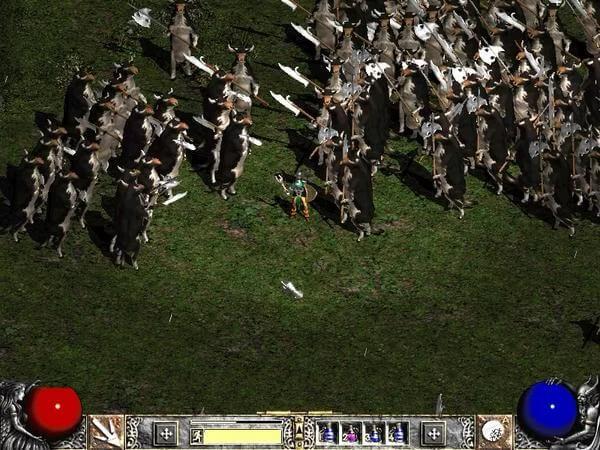
A hidden bonus world packed with murderous bipedal cows and a secret boss, the Cow King. It began as a joke and became one of the most iconic Easter‑eggs
The Secret Cow Level in Diablo II is one of the most bizarre and unexpected challenges in gaming history. What started as a rumour in the original Diablo became real in the sequel and it’s anything but silly once you enter. To access it, players must combine Wirt’s Leg and a Tome of Town Portal in the Horadric Cube after beating the game. This hidden ritual summons a red portal, transporting you to a fenced-off pasture swarming with…yes you guessed it, angry, axe-wielding cows.
Don’t let the mooing fool you this level is punishing. Hundreds of “Hell Bovines” charge in mobs, attacking in tight formations. Their sheer numbers and surprising strength can easily overwhelm even high-level players. The novelty of killer cows quickly wears off when you’re cornered by dozens. Unlike other levels where enemies have variation, here you’re faced with relentless uniformity making it easy to get surrounded and shredded if your gear or strategy slips.
Despite its absurdity, the Cow Level is a test of preparation and crowd control. Players must balance area-of-effect damage, positioning, and stamina. It punishes recklessness and rewards methodical play, turning a joke level into a genuine gauntlet.
Symbolically, it mocks both players and the game itself. It’s a satirical twist on fantasy tropes turning docile farm animals into agents of chaos. The humour runs deep, but so does the difficulty.
The Secret Cow Level remains one of gaming’s most memorable hidden stages, it’s difficult, unexpected, and packed with character. And no, there is no cow level… or so they say.
4. Glitch City (Pokémon Red/Blue)
A corrupt zone accessible through specific glitches, filled with strange graphics and warped NPC behaviour. It’s surreal, unstable, and exists entirely outside the intended game
Glitch City is one of the strangest, most unsettling places in the original Pokémon Red and Blue. It’s not meant to exist accessed only by exploiting a save/reset bug after attempting the Safari Zone glitch. But once you’re inside, the rules of the game fall apart.
Visually, Glitch City is chaos. Terrain tiles are scrambled, paths lead to nowhere, and water flows into trees. It feels more like a corrupted dream than a real place. There are no Pokémon, no trainers, just a jarring silence and broken graphics that unsettle even seasoned players.
Movement is limited. You often get stuck in invisible walls or loop endlessly, making it incredibly difficult to escape without using a Pokémon with Fly or resetting the game. What begins as curiosity quickly becomes disorientation.
Symbolically, Glitch City represents the raw code behind the illusion like peeling back the curtain to reveal the machine underneath. It’s a byproduct of human error and player interference, a glitch that exposes the limits of the world-building.
There’s a quiet unease here. No battles, no music, just a shattered map and a sense that you’ve gone somewhere forbidden. It’s as much psychological as it is digital a reminder that even in childhood games, there are cracks in the surface.
Players who stumbled into Glitch City often felt they’d broken something sacred. And yet, it became legendary a secret realm shared through whispers and early internet forums, giving rise to endless myths and creepy pasta.
Glitch City isn’t just a broken level it’s a digital ghost. A relic of early game design where the code was fragile and exploration could take you beyond what the developers ever intended.
Check out how xforever1313
5. The Painted World of Ariamis (Dark Souls)
Ariamis is a forgotten, snow-covered world sealed within a painting, only accessible if the player uncovers a hidden item and dares to be pulled in. It’s haunting, isolated, and rich in lore. Unlike the interconnected world of Dark Souls, this area is entirely self-contained once inside, you must fight your way out.
Enemies here are brutal and varied: toxic harpies, undead crossbreed guardians, and pyromancers who stalk you through narrow corridors. The terrain is treacherous, with sheer drops, deadly traps, and hidden ambushes waiting around every corner.
Symbolically, Ariamis represents exile and rejection. It’s a world of outcasts and unfinished experiments, mirroring the player’s own struggle to make sense of the game’s cryptic narrative. It asks whether beauty and monstrosity can coexist and whether escape is ever truly possible.
6. Starfox: Secret Slots (Star Fox, SNES, 1993)
Shoot an asteroid to ride a giant origami bird into a warped carnival realm with a slot-machine boss. Silly, surreal, and completely unmoored from the rest of the game.
Hidden deep in the original Star Fox is a bizarre, slot machine-themed level known as “Out of This Dimension.” It breaks every rule of the game. Instead of dogfighting enemy spacecraft, you fly through a psychedelic dreamscape filled with paper planes and floating faces.
At the end of the level, you fight a literal slot machine. You win only if you score three sevens. If not? The level never ends. You’re stuck in a surreal limbo, flying endlessly until you reset the game.
This level plays like a prank from the developers both humorous and unsettling. It’s a commentary on randomness and the illusion of control. For kids in the ’90s, it was either a rare treasure or a maddening curse.
7. Unfortunate Development (Rain World, 2017)
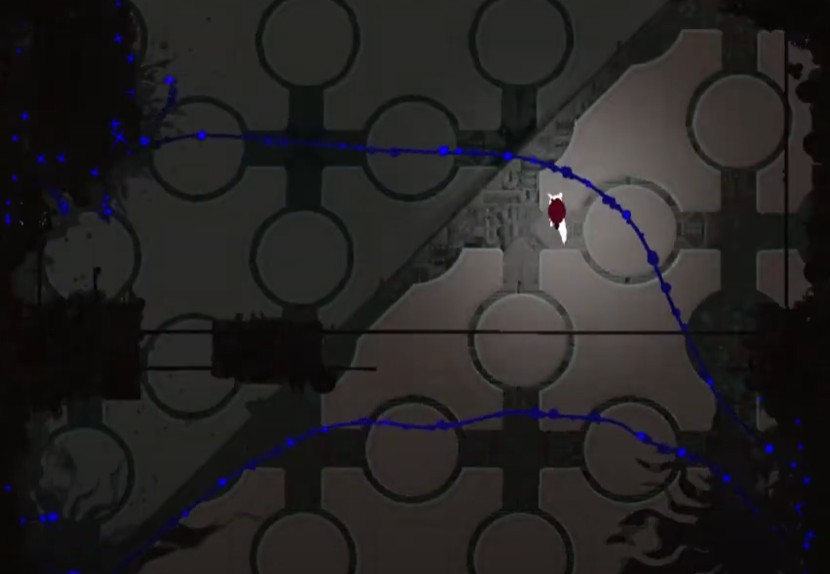
Rain World is punishing by design, and nowhere is that clearer than in this late game level. The environment is cruel, filled with echo chambers, broken scaffolding, and aggressive predators that learn from your movements.
The area offers few resources, forcing players to scavenge and take risks. One wrong move can erase hours of progress due to the game’s brutal save mechanics.
What makes it worse is its eerie silence. There’s no music, just the sound of dripping water and distant monsters. It’s a space of solitude and existential dread.
This level symbolises decay of civilisation, of the self, of hope. Rain World doesn’t just challenge your reflexes, it tests your patience and your willingness to continue.
8. All Ghillied Up (Call of Duty 4: Modern Warfare, 2007)
This level stands apart for its tension and restraint. You play as a young sniper crawling through Chernobyl with your mentor, Captain MacMillan. One wrong step can blow your cover and bring a swarm of enemies.
The standout moment sneaking through tall grass as enemy troops march inches away is iconic. It redefined stealth in first-person shooters.
What makes it difficult isn’t just the gameplay mechanics it’s the psychological pressure. You’re not just shooting enemies; you’re surviving an invisible battlefield.
The symbolism here is potent. The ghillie suit erases your identity. War becomes about silence, patience, and disappearing. It’s a stark contrast to the usual run-and-gun chaos.
9. Item Abuse 3 / PangaeaPanga Hacks (Super Mario World)
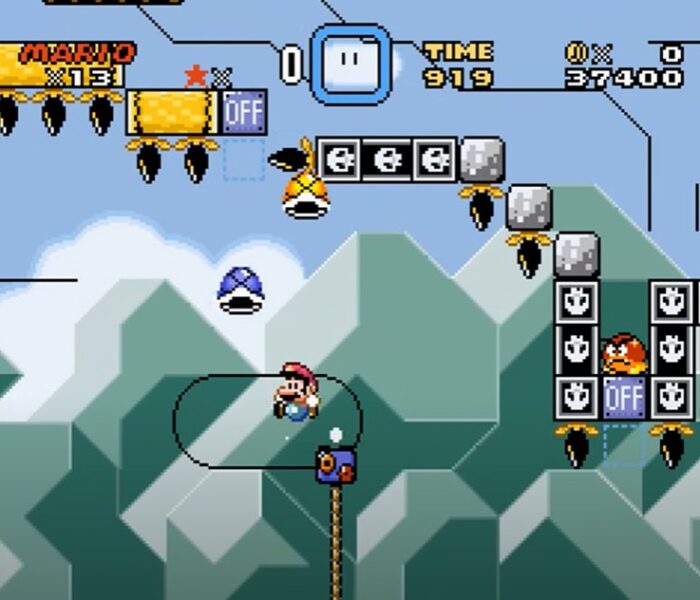
This fan-made hack of Super Mario World is infamous for its brutal difficulty. It demands frame perfect jumps, pixel-perfect spins, and glitch abuse that only tool-assisted speedrunners can consistently pull off.
The level design is intentionally unfair PangaeaPanga crafted it to push the absolute limits of what a human can do in a Mario engine.
Most players can’t finish the first screen. But for elite players, beating it is a badge of honour. It blurs the line between playing and programming.
Symbolically, this level is a monument to obsession. It’s not about fun. It’s about endurance, mastery, and proving something to a microscopic niche of the gaming world.
10. Eggplant Run (Spelunky)
Spelunky’s Eggplant Run is a bizarre and punishing self-imposed challenge. You must carry a fragile, one-hit-kill eggplant item across multiple deadly levels without dropping or destroying it.
It sounds simple, but the obstacles are overwhelming. You need precise movement, co-op manipulation (in the original version), and absurd luck. One misstep and the run is over.
Why do it? Because it unlocks a special boss: King Yama, who can only be defeated with the eggplant. The reward isn’t a high score it’s bragging rights.
This level is a parable of absurd devotion. The eggplant, fragile and useless, becomes a symbol of purity, persistence, and trolling the system. It’s the ultimate example of players bending the game to their will just for the sake of it.
Check out the amazing run below from HectiqueAgain on YouTube. A fantastic display of how to get the job done!