Tetris Effect: Why Stacking Blocks Can Be Meditative
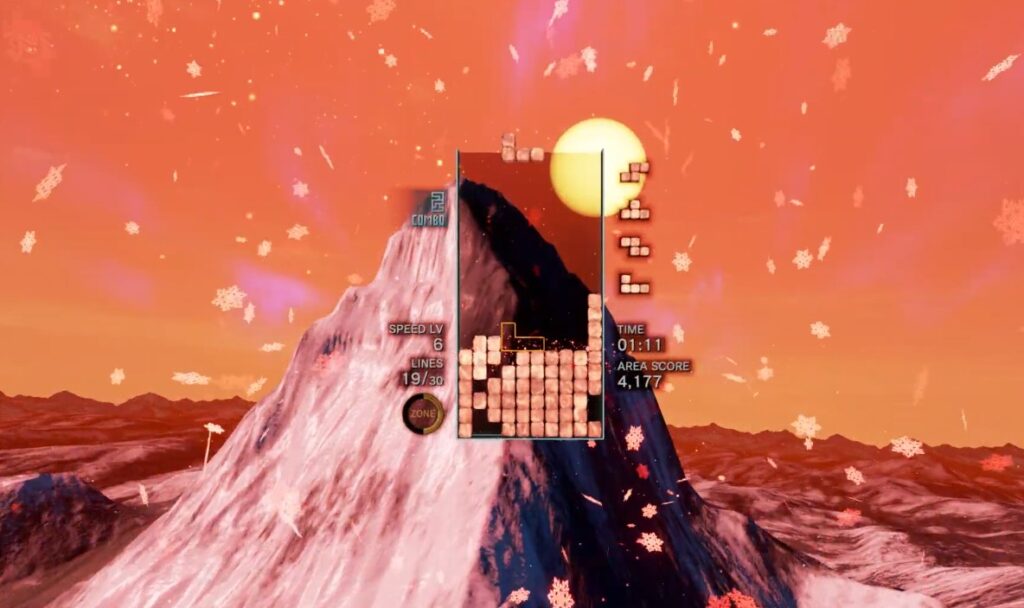
I’ve played countless games that demand focus, skill, and strategy, but few have ever brought me peace quite like Tetris Effect. It’s strange when you think about it, a game built on falling blocks somehow manages to quiet the noise of the real world.
What makes Tetris Effect so powerful isn’t just its simplicity. It’s the harmony between visuals, music, and rhythm that turns gameplay into meditation. Each line cleared feels like a breath exhaled, every movement syncing perfectly with the pulse of the music.
There’s no pressure to win, just the quiet satisfaction of flow, just how I like it.
The Magic of Flow State
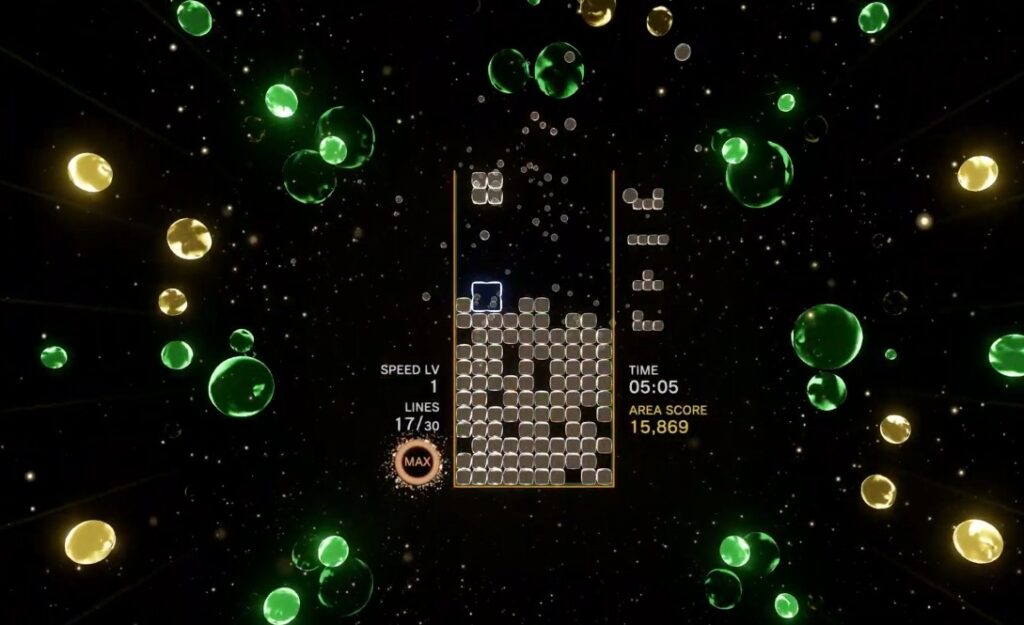
If you’ve ever lost yourself in a task so completely that time seemed to disappear, you’ve experienced what psychologists call flow state. Tetris Effect captures that perfectly.
As the game progresses, it becomes less about stacking efficiently and more about syncing with its rhythm. The music shifts in tone and tempo as you play, reacting to your movements. The lights pulse. The environment transforms. It’s a sensory experience that rewards focus over frantic action.
I’ve often found myself entering a state of calm during longer sessions and not because the game is easy, but because it encourages you to be present. There’s no room for distraction. Every block placement matters, and that total absorption is incredibly soothing.
If you appreciate the meditative side of gaming and enjoy a bit of nostalgia, you might like my piece on UFO 50 Retro Gaming’s Ultimate Time Capsule, which explores flow and precision in gameplay through a retro lens.
Sound, Light, and Connection
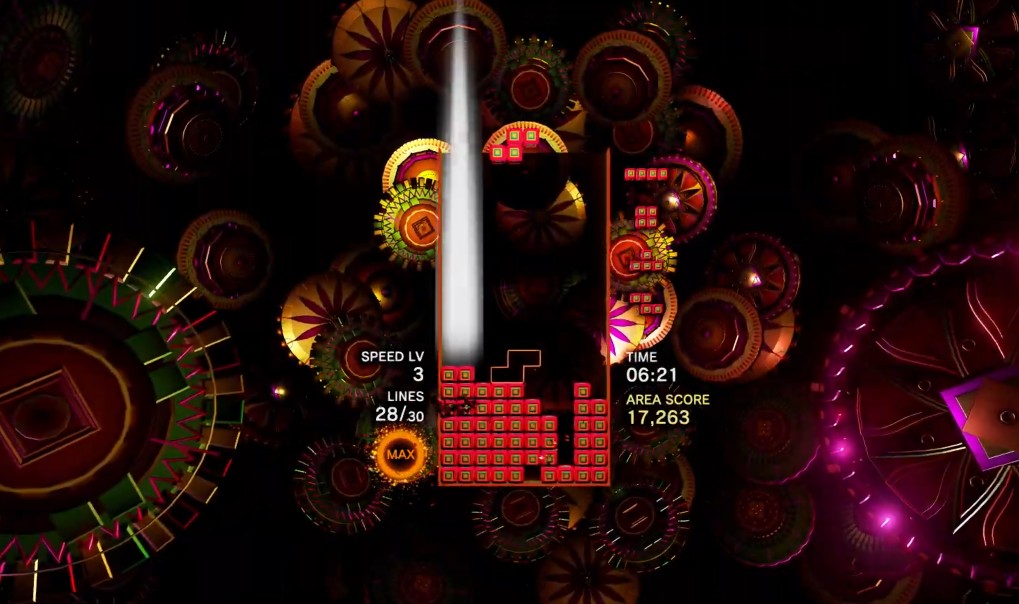
The soundtrack is a huge part of what makes Tetris Effect special. Every note feels designed to soothe, from ethereal vocals to the gentle hum of ambient beats, the music evolves with your performance.
I remember one level where every block drop created a soft percussion sound that synced perfectly with the background melody. It wasn’t just music, it felt like I was part of it. That sense of unity between player and game builds immersion unlike anything else.
It’s no surprise that some players use Tetris Effect as a form of mindfulness practice. It helps them decompress after work, calm their minds before bed, or even meditate through motion.
A New Way to Think About Challenge
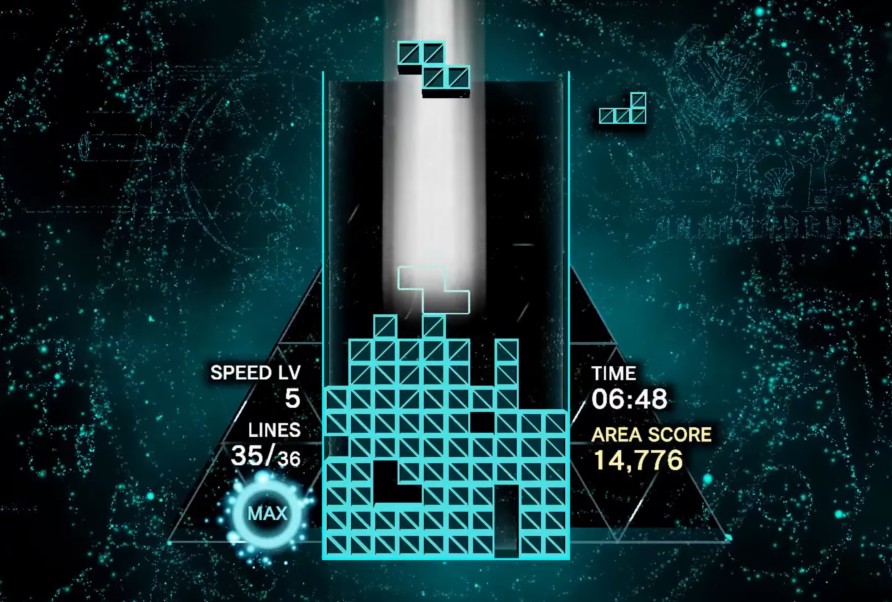
Many games use difficulty as a test of endurance. Tetris Effect approaches it differently. Instead of punishing mistakes, it transforms them into lessons. You start to notice patterns, anticipate shapes, and plan without panic.
There’s a certain satisfaction in knowing that failure isn’t a setback, it’s just another step toward rhythm and understanding.
I’ve realised that when I play, I’m not really chasing a high score anymore. I’m chasing that feeling of being fully absorbed, that moment when my thoughts quiet down and the world outside disappears.
In An Era Where Gaming Often Feels Fast, Loud, And Competitive
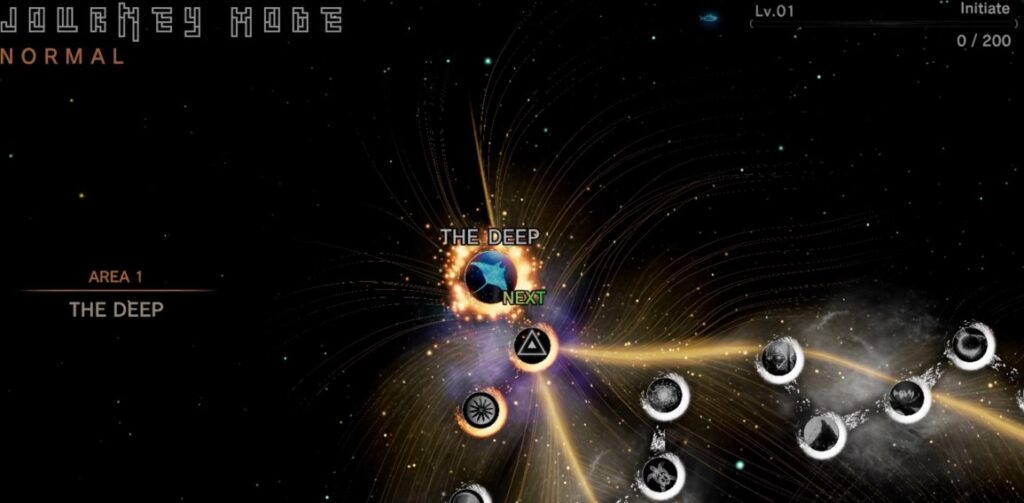
Tetris Effect stands as a reminder that simplicity can be just as powerful. It connects us to something ancient, the human need for pattern, repetition, and balance.
I think that’s why the game continues to resonate years after its release. It’s not just a nostalgia trip; it’s a reflection of how we use games to process life. Sometimes we need excitement. Other times, we need stillness. Tetris Effect gives us both.
To explore more about how Tetris Effect was developed and its artistic design philosophy, visit the official Tetris Effect page on Enhance Games’ website for behind the scenes insights and developer notes.
A Meditative Masterpiece
Every time I play Tetris Effect, I’m reminded that games don’t always need grand stories or complex systems to make an impact. Sometimes, all it takes is rhythm, colour, and focus.
It’s a reminder that peace can be found in motion, that beauty exists in repetition, and that sometimes, stacking a few falling blocks can teach us to breathe again.