

The Best Base Building Strategies in Subnautica
In Subnautica, your base isn’t just a home it’s your lifeline. It’s your oxygen factory, your workshop, your garden, your safe zone against predators, and your launchpad into the unknown. Build it right, and you get freedom. Build it badly, and you end up patching leaks in between fights with Reapers.
So let’s talk strategy on how to start smart, expand safely, and optimize for late-game glory.

Location, Location, Location in Subnautica
Before you drop your first foundation, pick wisely.
Stay reasonably shallow early. Solar panels work best near the surface. If your base is too deep, you’ll struggle with power in early game.
Balance access to resources. You want proximity to important biomes (for copper, quartz, etc.), but not so deep that reinforcements become crippling.
Consider vertical terrain. A base built into cavern walls or cliff faces gives you interesting design possibilities, but be careful of uneven ground messing with your module alignment.
Pre-base “starter” near the Lifepod is fine. Many players build a small pre-base close to Lifepod 5 just to store materials and craft while exploring for better real estate
Nail the Base Building Foundations & Reinforcements Early
A lot of rookie builds fall apart because they ignore structural integrity. Here’s what you need to know:
Foundations: These add hull integrity early on and allow placing exterior grow beds (since some grow beds require foundations).
Reinforcement panels and bulkheads: Once you get access to lithium (and better materials), reinforcements become far more important than foundations. You can slap reinforcements to unused wall surfaces to boost integrity without adding bulky structure.
Don’t overextend without support: If your integrity drops below zero, your base will flood. Always watch that hull integrity meter.
Bulkheads in hallways: A well-placed bulkhead between long corridors can break up stress and help prevent chain failures.
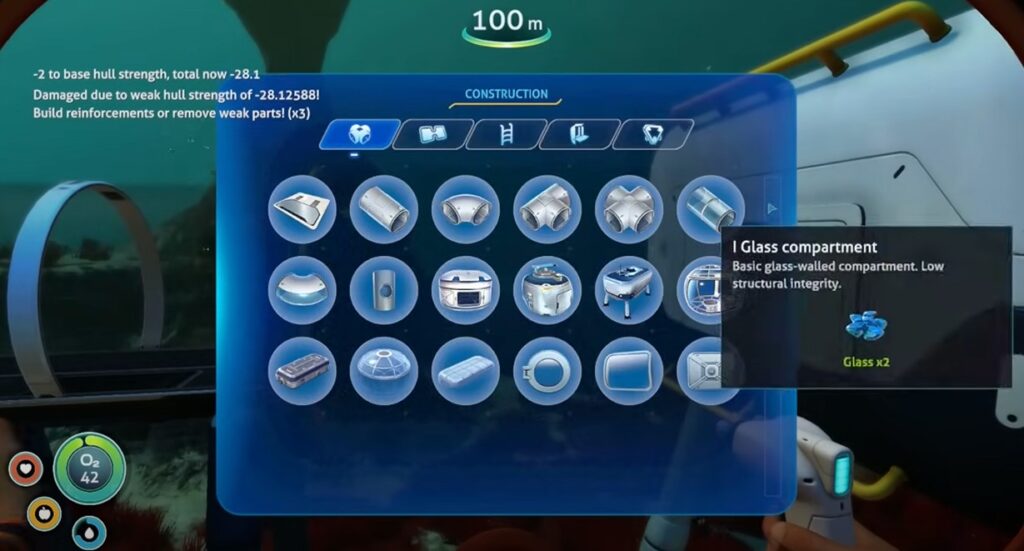
Module Sequencing in Subnutica: What to Build First
You can’t build everything immediately. Therefore, here is a suggested progression to keep things stable and smooth.
Tiny starter: Begin with an I-tube or corridor, a hatch, and solar panels. This is enough to store items, recharge your batteries, and establish basic functionality.
Multipurpose room expansion: The multipurpose room is your workhorse. For example, you can stack them, add lockers, install gadgets, and include growbeds.
Power upgrades: Use solar panels early. Later add reactors, thermal power, or bioreactors. However, do this only once you are deeper and have higher energy demand.
Moonpool or vehicle bay: This allows docking of your Seamoth or Prawn suit for recharging, upgrades, and safe storage. Therefore, be careful about orientation.
Growbeds and food production: Both interior and exterior growbeds help you get endless food and materials such as acid mushrooms.
Utility rooms and special modules: Scanner rooms, water filtration, battery chargers, and similar systems should be built after your core structure is stable.
Orientation Tricks You Should Know when building your base
Some details matter. At first you may not care about which wall faces north; however, you should plan ahead for cleaner builds.
- Your first compartment defines “forward” for ladders, hatch doors, and docking orientation. Therefore, think ahead about placement.
- Moonpool orientation is constrained because you cannot freely rotate it later, and its alignment depends on how the first module was placed.
- Seamoth docks always face left from the inside when entering the Moonpool. Consequently, if you want a clean entrance, plan around that.
- Ladder placement matters. The direction you face when placing a compartment affects where ladders go.
Take a moment when you place your first few modules so you avoid awkward layouts later.
Subnatica Base Storage and Organization: Save Yourself Headaches
You will collect a lot of materials. Unless you stay organized, your base becomes a cluttered mess.
Locker placement matters
Do not block windows or reinforcement spots with lockers.
Use signs
As your base grows, label where different types of materials live such as metals, electronics, and flora.
Stack logically
Some players build pantry levels stacked above crafting or workshop levels, then bring materials down as needed.
Leave space
Do not pack every inch with devices; allow room for expansion and emergency repairs.
Power Management in Subnautica: Don’t Let Your Lights Go Out
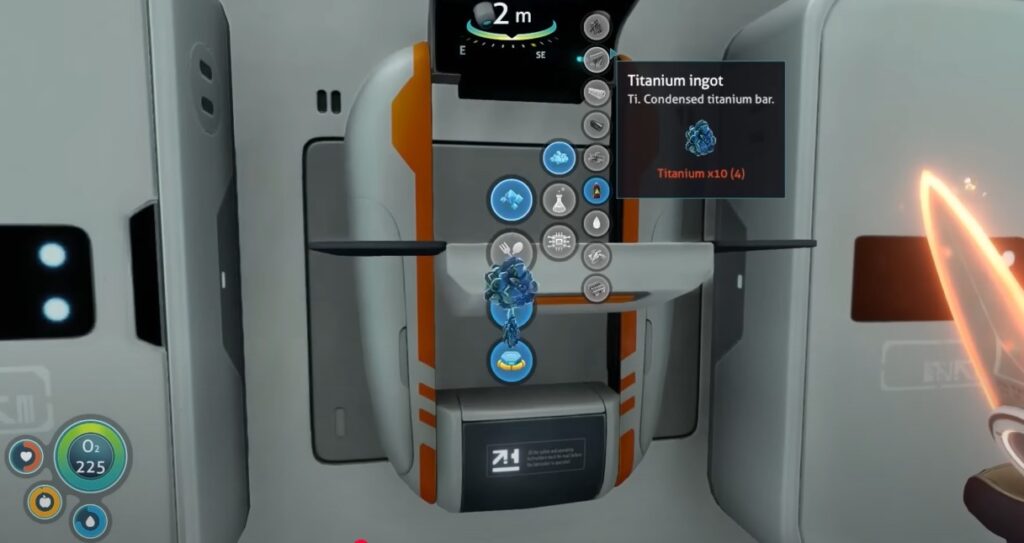
A base without power becomes a death trap underwater.
Solar is best early game because it is cheap and reliable in shallow waters.
Balance usage versus reserves Modules like water filtration and fabricators are power hogs, so turn off or deconstruct unneeded ones.
Upgrade to advanced power in mid game Do not rely forever on solar; add reactors or thermal power when possible.
Build buffer capacityBattery banks or capacitors let you survive periods of low generation such as night or storms.
Aesthetic and Functional: MakeYour Base Shine
Yes, function comes first, but there is room for beauty.
- Use windows selectively: They reduce hull integrity, so reserve them for your best views and reinforce accordingly.
- Partial above-water builds: These can look dramatic, however, keep critical systems underwater for stability.
- Experiment with colour and lighting: Floodlights, coloured panels, and mood lighting don’t affect survival, but they make your sea base feel alive.
- Choose your style: Some players prefer symmetry for clean designs, while others let their base grow organically like a coral reef.
Tips and Pitfalls from the Depths Of Subnautica
Deconstruct freely: You get 100 percent of materials back, so experiment without fear.
Flooding rescue order: If your base floods and integrity drops below zero, restore integrity first, fix leaks, and then let it auto-drain.
Plan reinforcement space. Do not block potential reinforcement areas with lockers or decorations.
Seeds vs samples: Some plants planted with samples are sturdier through harvests, while others planted with seeds repopulate more reliably.
Orient early modules wisely. Orientation locks in ladders, moonpools, and door directions, so misaligned early modules can cause regret later.
Here is a great video that will really help you get far in the game along with all the tips above.
Source: Breathtaker
Build Your Base Smart, Then Build Bold
Your Subnautica base should feel like a shell that grows with you rather than a burden you drag behind. Start carefully, prioritize stability, expand thoughtfully, and once the core systems are safe, unleash creativity with aesthetics and innovation.










1 Comment
Comments are closed.