Why Soulsborne Games Secretly Make You Kinder
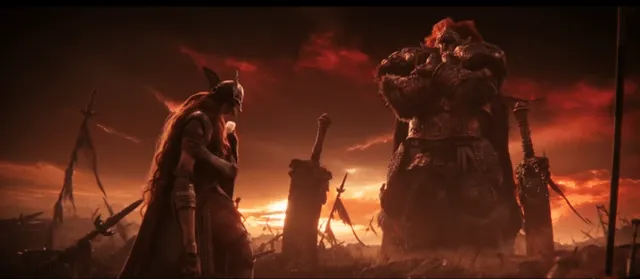
You’d think games full of death, despair, and monstrous agony would harden your soul but Soulsborne titles do something stranger. They break you down, sure. But in the ruins, they teach grace.
Dark Souls, Bloodborne, Elden Ring—they’re not just about fighting demons. They’re about fighting the parts of yourself that hate patience, humility, and failure. And in that constant death loop, something unexpected happens:
They break you. They bury you. They leave your ego in ruins.
But somehow, from the ashes of “YOU DIED”, something new emerges not just skill, not just grit, but… kindness?
Welcome to Gamer Melts, where I believe pain builds character and Soulsborne games prove it.
What Just Happened?

Every Soulsborne title (Dark Souls, Bloodborne, Elden Ring, even Demon’s Souls) is engineered to humble you. They’re merciless, quiet, and cryptic. They don’t explain themselves. They let you die, again and again, until something inside you clicks.
And yet you persist. Not because you’re told to, but because something in the quiet suffering feels true. It changes the way you approach games… and life.
You don’t just die in Soulsborne games. You learn to die well. And from that, a strange new kindness emerges.
Melt Factor Highlights
Patience as a Weapon
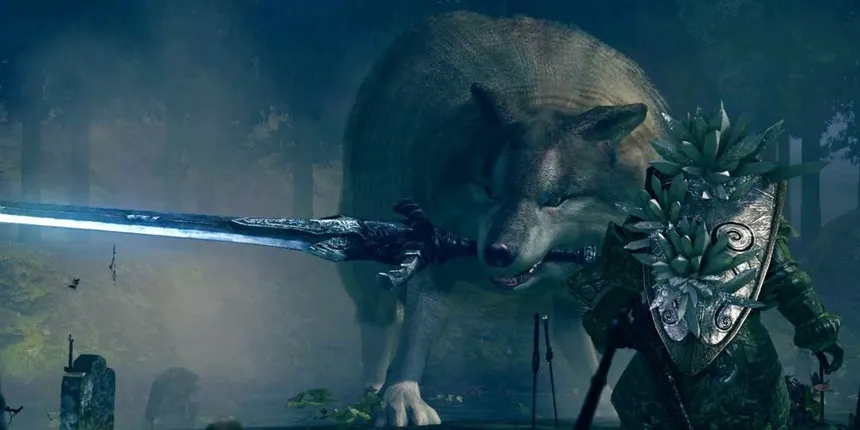
You don’t bulldoze through a Souls game. You observe. You wait. You listen to the way the wind shifts around a boss arena. You stop reacting—and start understanding.
This rewires your brain. Outside the game, you find yourself waiting more. Yelling less. Listening better. Somehow, Miyazaki made a game that teaches meditation through misery.
Every Enemy Is a Teacher
At first, every foe feels like an insult an unfair obstacle designed solely to ruin your day. The skeletons slash too fast. The hunters dodge everything. The dragons breathe fire exactly when you think you’re safe.
But somewhere between death number seven and death number seventy, you realize they’re not here to punish you. They’re here to refine you. Each attack is a lesson in timing. Each ambush is a seminar on awareness. Each failure is feedback, written in blood.
The beauty is, the game never sugarcoats it. It doesn’t pat you on the back or hand out participation trophies. It gives you honest, unfiltered consequence and in that raw honesty, you grow.
Over time, you stop treating these enemies like faceless obstacles. You start respecting them. Studying them. You notice the way their stance shifts before a heavy strike, the way their footsteps betray an incoming lunge. They stop being “annoying mobs” and start being professors in the brutal academy of persistence.
And when you leave the game, that mindset follows you. You stop taking criticism as an attack. You start looking for the lesson inside the sting. Even in arguments, setbacks, or difficult people you find yourself thinking, What is this teaching me?
In Soulsborne, your enemies shape your victory. In life, they can shape your character.
Empathy Through Struggle
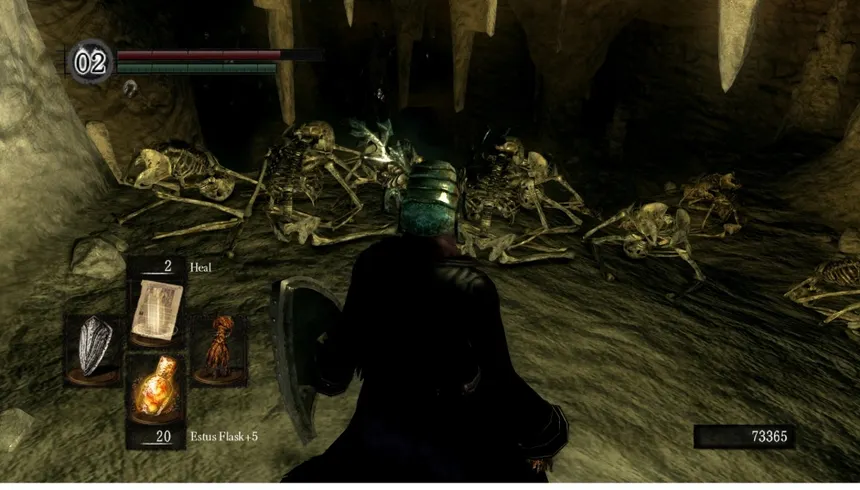
Everyone playing a Soulsborne game knows the pain. That’s why the online messages, the emotes, the gestures—they hit different.
“Try jumping.”
“Hidden path ahead.”
“You’ve got this.”
It’s the most respectful multiplayer community in gaming, because everyone knows what it took for you to get here.
The Psychology of Acceptance
Soulsborne teaches you to let go. Of perfection. Of control. Of fairness.
You stop asking “Why is this so hard?” and start asking “What am I missing?”
That kind of thinking bleeds into real life. You start meeting challenges not with anger—but with curiosity.
That’s not a game mechanic. That’s a life skill.
The Joy of Small Victories
In Soulsborne, progress is often measured in inches, not miles. Maybe you don’t beat the boss today. Maybe you just get them down to 40% HP before they flatten you like a pancake. And yet, that’s a win.
You start celebrating progress, not perfection.
A good day isn’t “I finished the game.” A good day is “I learned something.”
And in life, that mindset turns frustration into fuel.
The Quiet Companionship of Strangers
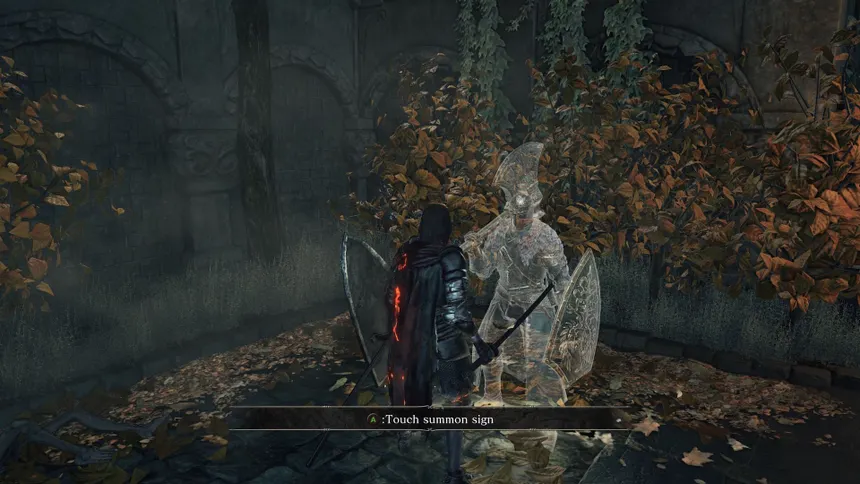
Soulsborne multiplayer isn’t about shouting over mics or barking orders. There’s no squad chatter, no battle plan scribbled out in the lobby. It’s a kind of cooperation that feels almost ancient ritualistic, even.
You send out your sign. Someone answers. A golden phantom steps into your world, faceless yet familiar. There are no introductions, no small talk just a mutual acknowledgment. ‘We both know what we’re about to face, and we both know what it can do to us’.
Then comes the bow or maybe a silent wave or in my case a silly dance just to get the blood warmed up. That’s your contract and together, you step into the fog.
There’s no need to prove who’s better. No scoreboard will track your contribution. If one of you falls, the other fights on. If you triumph, the victory is shared, but not flaunted. The moment is its own reward.
And when it’s over, there’s no drawn out farewell. Your ally fades back into their own world, like a warrior passing through your life on their way to another battle. You never hear their voice. You never see their face. But you remember them because they showed up when it mattered.
Melt Meter: Soulsborne Kindness Edition
Mind Warp: 8/10
From rage to grace. It’s not just a difficulty curve it’s a humility curve.
Emotional Damage: 9/10
They break you, yes. But then you’re better. Not just at the game—at being.
Gameplay Feel: 9.5/10
Weighty, raw, deliberate. Like fencing with fate.
Empathy Factor: 10/10
Only a Souls player knows what another Souls player has survived.
Philosophy Vibes: 8.5/10
Beneath the blood and crypts lies a silent koan: “Persist, with grace.”
Total Melt Score: 9.2/10
Soulsborne games don’t just test your skill. They transform your character—in-game and out.