Atomic Heart: The Mad and Sublime Utopia

Some games impress. Others confuse. Atomic Heart does both and then dropkicks your reality into a vat of polymer. This isn’t just a shooter with pretty graphics, it’s an existential fever dream that simulates utopia and rot in the same breath. That’s exactly why it melts people’s brains.
At first glance, Atomic Heart lures you into a polished Soviet fantasy golden statues, flying cities, and a soundtrack that could have been co-composed by Tchaikovsky and a malfunctioning AI. But scratch the surface and you realise: this world isn’t beautiful. It’s deeply, deeply wrong.
Aesthetic Overload Meets Existential Dread
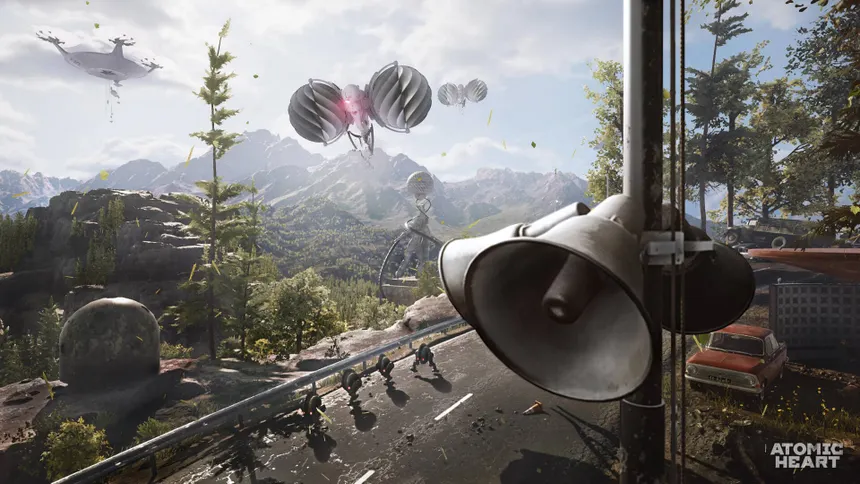
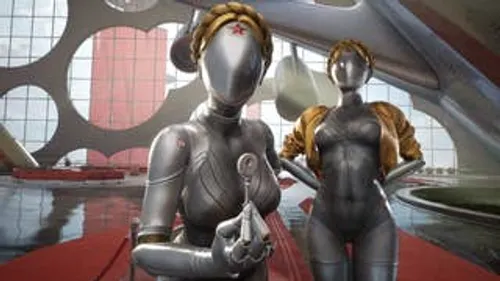
It’s rare for a game to make you feel awe and nausea at the same time. The exaggerated utopia of Atomic Heart is like an Instagram filter over a nightmare. Every corridor whispers conspiracy. Every cheerful voiceover sounds like it’s hiding a scream. The robots? Slick, ballet-like, and just as likely to twist your spine as they are to polish the floor.
Visual design that seduces and repels
The game leans hard into a retro‑futurist Soviet aesthetic: monumental architecture, polish, and uncanny symmetry. On the surface it’s postcard‑perfect; underneath, it’s rotten. That friction is the game’s primary engine for atmosphere.
Sound & Score: Tchaikovsky vs. Malfunctioning AI
The soundtrack blends classical motifs and warped electronics. The music is part of the game’s narrative fabric expect moments where the score cues a reveal before the plot does.
Narrative That Doesn’t Hold Your Hand, It Slaps Your Brain
What fries players’ circuits is the narrative structure. It doesn’t spoon feed or even nudge you toward answers. Instead, it drops you into an ideological hallucination and trusts you to assemble the pieces, if you care to.
Structure and payoff
The story rewards attention to detail (environmental storytelling, graffiti, short audio logs). If you’re someone who loves story explained posts and ending explained discussions, this game gives you plenty to mine.
Gameplay & Mechanics — A Chaotic Ballet of Guns, Gadgets, and Glitches
Under the aesthetic is a hybrid of FPS and melee, with crafting, gadgets, and mutation systems. It’s not always balanced, but it rarely bores.
Weapons, combat & pacing
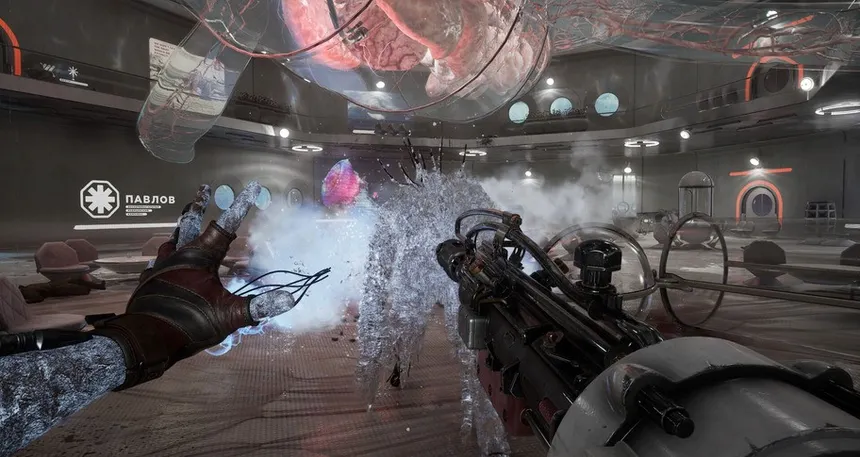
Expect to swap between improvised weapons and bizarre modifications. Some fights feel cinematic; others feel unfair but both are memorable.
Bugs, polish, and player tolerance
There are moments where the game’s ambition outruns stability. Long‑time players will forgive a glitch if the scene is riveting enough.
Themes & Interpretation
This is a game obsessed with the gap between ideal and reality. It stages a conversation about progress, ideology, and the human cost of technological utopia.
The satire is literal (and sometimes messy)
Sometimes the game reads as sharp satire; sometimes it’s just loud and messy. Both modes are compelling in their own way.
Why Gamers Keep Coming Back (Even If They’re Confused)
Atomic Heart isn’t just entertainment, it’s a test. A test of patience, of attention span, of whether you can handle a world where logic and style clash seductively. It’s messy, flawed, and unforgettable.
Mystery & Discovery
The game is built like a locked chest: every runny audio log, propaganda poster, and half-broken robot might hide a clue. That slow drip of discovery the sense that the next corner could rewrite what you thought you knew keeps players poking at seams long after the credits roll.
Skill, Mastery & Replay Loops
Combat and gadgets reward experimentation. Trying new mutation combos, swapping loadouts, or tackling the same boss with a different approach creates satisfying micro‑goals. Those small victories are addictive and encourage replay.
Mods, Speedruns & Content Creation
Modders reshape the experience (visual tweaks, quality‑of‑life tools, bizarre weapon mods), while speedrunners find joy in bending encounters into tight, repeatable challenges. Content creators amplify these moments a viral boss kill or a theory video sends others back into the game to replicate or refute it.
Community Hooks & Social Proof
Lore theorists, subreddit threads, and Discord servers act like social hotspots, they surface hidden details, propose wild interpretations, and offer cooperative problem‑solving. When a community rallies around a mystery, even casual players feel pulled in to participate.
Design Elements That Promote Return Play
- Unfinished business: Optional missions and hidden endings that reward curiosity
- Variety of tools: Multiple viable playstyles (stealth, brute force, gadgetry) invite experimentation
- Environmental storytelling: World details that only reveal themselves after multiple visit
Common Criticisms
I try to be generous with ambitious games, but Atomic Heart has flaws worth calling out. I found some problems persistent enough that they may shape whether you get fully on board.
Pacing issues: chunks of the game sag
There are stretches where the momentum stalls — long corridors of fetch quests or repeated minor encounters that blunt the urgency. I remember a sequence where the scenery was stunning but the objectives felt like filler; I had to force myself to push through rather than losing interest and alt‑tabbing to something else. These sections hurt the rhythm because the game oscillates between cinematic highs and repetitive lows.
Difficulty spikes: some encounters feel inconsistent
The difficulty curve can be jagged. I’ve been cruising through an area using stealth and clever mutations only to hit a single fight that demands precise timing, a different mutation set, or a specific weapon I hadn’t prioritised. That inconsistency made a couple of boss fights feel less like satisfying challenges and more like uphill walls maddening in the moment, memorable afterward, but occasionally break‑the‑flow aggravating.
Cluttered plot: if you prefer tidy narratives, this will frustrate you
Atomic Heart delights in mystery, but that same approach leaves gaps. If you want a linear, airtight story where every question is resolved, this isn’t it. I kept wishing for clearer connective tissue between key reveals; instead I had to stitch meaning from environmental hints and half‑heard logs. That ambiguity is the game’s personality, but it’s not everyone’s cup of tea.
Quick pros & cons (for skimmers)
Pros:
- Visually and sonically stunning moments that linger
- Highly creative combat tools and mutation variety
- Rich environmental storytelling for players who enjoy piecing things together
Cons:
- Pacing dips that create boredom between peaks
- Occasional difficulty spikes that feel unfair
- Plot can be messy; casual players may feel lost
Practical Tips for Players
I usually treat tips sections like cheat codes for enjoyment small moves that turn confusion into fun. Below are practical, first‑hand tested (from my multiple playthrough approach) pointers that helped me enjoy the game more and avoid some common frustrations.
Save smart, explore thoroughly
Save often, in multiple slots. The game’s spikes make a corrupt save or a poor choice more painful than it needs to be. I keep at least two manual saves: one before a risky area and one after.
Search corners for audio logs and notes. I found some of the most satisfying narrative threads in tiny side rooms a half‑hidden locker, a derelict office, graffiti behind a stack of crates. These are often where context and jokes live.
Prioritise weapon upgrades and playstyle synergy
Match weapon upgrades to your playstyle. If you like stealth, invest in silenced mods and movement perks; if you’re a run‑and‑gun player, prioritise ammo economy and powerful short‑range mods. I switched to a shotgun centric build midway through and it changed how I handled tight arenas.
Balance crafting components. Don’t blow all your resources on flashy toys early; keep a reserve for key upgrades you discover later.
Mutation combos & boss strategies
Experiment early, specialise later. Try different mutation combos to learn what clicks for you, then double‑down on the ones that feel powerful. I liked mixing a crowd‑control mutation with a damage‑over‑time mutation for sustained fights.
If a boss stalls you, change the frame. Don’t be afraid to alter your loadout, swap mutation kits, or even backtrack to collect a specific upgrade. One boss that stumped me became manageable after I upgraded a particular ranged attack and used environmental hazards to my advantage.